
2 Types of Piano Transcriptions
Piano transcriptions are adaptations of complete musical compositions from other instruments to the piano. They can range from more or less faithful piano arrangements through to free fantasies on themes from operas or symphonic works, sometimes also known as paraphrases. The pianist Franz Liszt was perhaps the most prolific composer of piano transcriptions, and his work is regarded as the apogee of this art. His piano transcriptions and paraphrases were a way of making available a vast amount of classical music to ordinary people at a time when huge developments in the manufacture and production of the piano made it possible for this rich repertoire to be enjoyed by amateur players in the home.
There are two major types of piano transcriptions: the arrangement and the adaptation. The arrangement involves the copying of a piece of music note for note, as in the case of Horowitz’s Hungarian Rhapsody No 2. This kind of transcription is often used as a teaching tool and is considered to be the highest form of piano transcription. The adaption type of piano transcription is often more complex, and it includes the use of the piano as a means of suggesting the singing voice or the timbres of other instruments.
The key to piano transcribing is to understand that what we hear when we play a single note on the keyboard is not just one sound vibration but a composite of multiple sound vibrations at different mathematically related frequencies. These components are called harmonics, and their frequencies are referred to as pitches. When two or more harmonics fuse together, the human ear perceives them as a single pitch, and this perception is based on the relative strengths of each harmonic to its nearest neighbor. Thus, the closer a harmonic is to its nearest neighbor, the more it sounds like that neighbor, and a higher-order harmonic (such as a sixth) will sound much sharper than a lower-order harmonic (such as an eighth).
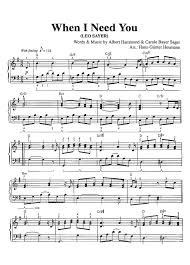
What Are the 2 Types of Piano Transcriptions?
The blending of the harmonics together in the piano produces the overall sound of the piano, and it is this that needs to be transcribed for the pianist who wishes to make a successful piano transcription. To do this, it is necessary to know the harmonic structure of the original piece.
Luckily, there is a way to determine the harmonics of any given sound, and this is by using a technique called pitch detection. It is a computer program that uses a microphone and an audio analyzer to record and process a piece of music, and it will produce a table of the frequencies that are present in the recorded material. The resulting table will allow the pianist to reproduce the composite of harmonics that make up any given note on the piano by playing the appropriate keys on the keyboard.
The process of piano transcribing is very challenging, and it is not uncommon for the aspiring pianist to spend years working on a particular piece. This is because it is not just about hearing and then writing down what you hear, but it is a mixture of hearing and deduction. This is why the pianist must have very good aural skills, but they are not enough by themselves.