
Flexible Printed Circuit Manufacturers Manage International Orders
A flexible printed circuit (abbreviated as FPC) has conductive traces on a thin, pliable substrate that can bend or twist. While they perform the same electrical function as regular PCBs, they differ in manufacturing processes, materials and design. FPCs are utilized in applications like computer peripherals that connect the signals to moving print heads and read/write heads of disk drives or medical equipment when numerous interconnections are required in a compact space. They are also used in consumer electronics such as cameras and mobile devices like cellular phones.
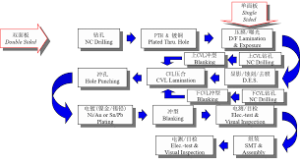
To manufacture a flex circuit, the flexible printed circuit manufacturers uses a special type of copper that can be etched to form the desired wiring pattern. The cured photoresist covering the copper is then removed with a chemical solution, leaving only the wiring pattern. An insulating layer, known as a coverlay, is then formed around the wiring pattern. The resulting flexible printed circuit board has the ability to curve or bend with minimal damage.
The flexibility of a flexible printed circuit allows engineers to design more intricate arrangements. This enables them to combine surface-mounted components with plated through-hole assemblies and create a more dense package. They can also employ more lightweight conductors as well as use smaller traces and pads to reduce mass.
How Flexible Printed Circuit Manufacturers Manage International Orders
An important consideration when evaluating a flex circuit manufacturer is their capacity to produce high-volume orders. A top-tier company will have adequate facilities, cleanrooms and automation. They will also have the production capabilities to ensure consistent, functioning yields and have staffing that can keep up with output volumes. They will also have quality control regimens and inspection techniques that can withstand the stress of large production runs.
Ideally, the supplier will offer a full range of services from prototyping to assembly and packaging. This can help you minimize the number of suppliers and streamline your supply chain. This can help you save time and money and reduce the risk of miscommunication between your suppliers.
When choosing a flex circuit manufacturer, be sure to ask for references and contact them. This will give you a sense of the manufacturer’s quality and reliability, adherence to delivery schedules and customer satisfaction. A reputable company will have plenty of satisfied customers to share with you.
In addition to a proven track record, look for a flex circuit manufacturer with the following qualities:
Lot Tracking: A system to trace every order back to specific production batches. Change Management: The capability to handle mid-production design change orders and feature adds. Shipping: Familiarity with international shipping and customs regulations. QC Focus: A culture of focusing on quality assurance at every step in the process. This includes a rigorous inspection and testing regimen for each piece of product produced.
A good flex circuit manufacturer will be able to provide a prototype for each order before the actual production run starts. This will allow for any issues to be identified and corrected before the mass production begins. This is an effective way to ensure that your flex circuit will work properly when it is deployed in the field.